Twenty Days & Twenty Movies

Not necessarily the best movies ever made, but these are twenty of my favorites, in no particular order.  Each post for the next twenty days will feature a brief discussion of one film (though one or two days will have multiple posts to make up for absences). 

Post 4: The Third Man (1949 dir. Carol Reed)

Of all the great parts that form Carol Reed’s classic film, two have always stood in the center of my nostalgia for it. First, allow me to point to Anton Karas’ zithar score. On paper the idea probably sounded a little bizarre to the studio, but in practice it creates the perfect sarcastic tone. The sound evokes a playful yet slightly off-center panorama of mistaken expectations, story twists, and lies. Upon hearing it, one cannot help but wonder what the hell is going on here? What indeed.

The story is at times deadly serious, as with the switched medication at the hospital’s children’s ward, and at times cynically amusing especially with its observations of the characters’ subtle actions. Watch Crabbin (Wilfrid Hyde-White) throughout the film as he steers his many lovers around a room. Or watch Anna (Alida Valli) calmly and easily maneuver around Harry Lime’s apartment, clearly suggesting she’s spent a lot of time there. No one says these things, they just suggest them by their actions. We are shown, not told, what is really going on in post-war Vienna.

The second moment from my memory is the ending. The final shot, which Reed holds for longer than anyone would dare attempt today, says everything about the preceeding hour and forty minutes. The score again plays counter to the action. It is not a traditional happy ending, but it is the absolute right ending for this story.

Yes, there is the cuckoo clock speech, the shots of the ferris wheel, and the now famous chase through the sewers. And, of course, there thankfully exists the brilliant moment when we finally see Harry Lime (Orson Welles), his wicked smirk illuminated by the apartment across the street as though he just got his hand caught in the cookie jar which ostensibly he did. These are all wonderful, and the movie is filled with such monumental moments. The unexpected never ceases with this film, but the music and the ending remain my touchstones.

The Third Man is a force of nature, a true creative juggernaut, always entertaining, always inspiring, and always a joy to behold.

Twenty Days & Twenty Movies

Not necessarily the best movies ever made, but these are twenty of my favorites, in no particular order.  Each post for the next twenty days will feature a brief discussion of one film (though one or two days will have multiple posts to make up for absences). 

Post 3: Father of the Bride, Part II (1995 dir. Charles Shyer)

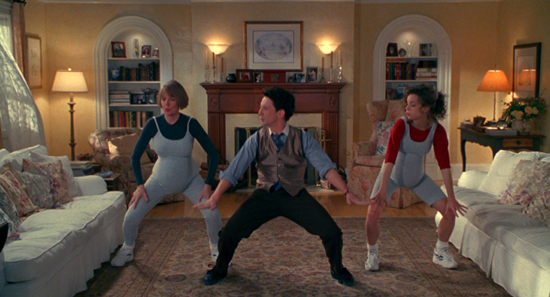
There is an inexplicable albeit miraculous chemistry between Steve Martin and Martin Short. Their combined comedic brilliance just works. The highlight of this film is watching them work together as foils for each other’s character. Steve Martin, the high-strung middle-aged father-to-be blocked against Martin Short, the tightly wound accent heavy interior designer, creates hilarious tension.

Carefully observe their physical comedy together in the scene after Steve Martin passes out from the Vastnik (v-a-t-s-n-i-k). Short carries him, drags him, even pushes him like a train (“Atcheson-Topeka”), all with no real accoplishment. But their characters have been so well established that the interplay becomes funny, despite the emergency circumstances (Martin’s wife is in labor, and so is his daughter).

The film provides the usual, comforting innocence and privilege often associated with the films of both Charles Shyer and his then wife/producer Nancy Myers. Myers would go on with her own very succesful career as a film director, continuing to work with Diane Keaton. Keaton is also comedy gold in this film. The whole cast works so well together that I welcome rumors of a Bride, Part III.

But, without a doubt, the one scene that always gets me uncontrollably laughing happens immediately before Short carries, drags, and pushes Martin’s unconscious body around the living room floor. George Banks (Martin) sits at the kitchen table, having just taken TWO of the aforementioned international, though as of yet not FDA approved, sleeping pills. He quietly states, “Please pass the rolls” and then passes out. Martin’s delivery of that very line is so perfect, so well executed, and so funny I chuckle even just now thinking about it. When a film can get an audience to laugh at a line as simple as “Please pass the rolls” then something is just plain working.

Poor George Banks. Franck’s (Short) repsonse is just as good: “He took them both! Two Vastnik is like, ‘Bye, George! See you next Thursday.'” This is a fun, warm-hearted, perfectly cast film. It is a joy to watch and one of my favorites.

Twenty Days & Twenty Movies

Not necessarily the best movies ever made, but these are twenty of my favorites, in no particular order.  Each post for the next twenty days will feature a brief discussion of one film (though one or two days will have multiple posts to make up for absences). 

Post 2: Score: A Film Music Documentary (2016 dir. Matt Schrader)

I vividly remember the moment, as a young boy, when I realized one could listen to film scores separate from the movie. My late Grandmother fueled my love of movies. After rewatching Star Wars (1977) on HBO in the very early 1980’s she showed me her double LP of the score by John Williams. We immediately listened to it and not only was I instantly hooked on film scores but John Williams became a hero of mine.

Film scores can be subtle and unnoticeable such as some of Carter Burwell’s work with the Coen Brothers. They can be deliberately loud and romantic as with Maurice Jarre’s work with David Lean. Or they can even be a character in the film itself much like John Williams’ work on Close Encounters of the Third Kind (1977), Patrick Doyle’s music for Dead Again (1991), and Jerry Goldsmith’s score for Malice (1993).

But here at long last is a documentary chronicling the history and evolution of film scores. Archival footage, interviews, and critical response all combine to make an entertaining and compelling review of music written for movies. Film truly is a collaborative art.

Twenty Days & Twenty Movies

Not necessarily the best movies ever made, but these are twenty of my favorites, in no particular order.  Each post for the next twenty days will feature a brief discussion of one film (though one or two days will have multiple posts to make up for absences). 

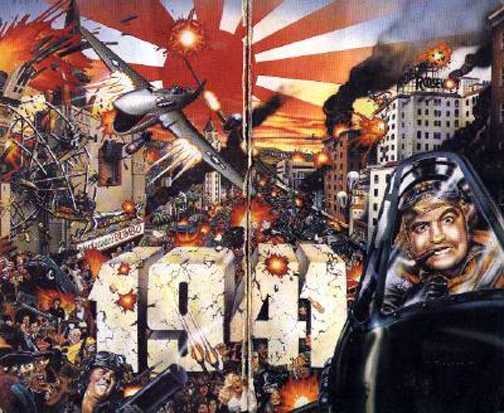
Post 1: 1941 (1979 dir. Steven Spielberg)

Maybe the most shocking thing for me about this movie was later learning it was not well-received upon its initial release.  I was alive that year, but not yet old enough to see it in theaters. Researching reviews from 1979 I can understand what critics and audiences were saying and can better appreciate their perspective.

But they were wrong.  Or perhaps the gift of hindsight has helped provide a new perspective. 

Being strictly a comedy, it is an unusual film on Spielberg’s curriculum vitae and even he has admitted Bob Zemeckis might have been a better director for the film.  It was Zemeckis and Bob Gale who wrote the script after all (they would both a few years later go on to a small project known as “Back to the Future,” perhaps you’ve heard of it).  And they wrote it from a story by John Milius.

There is an energy to this film that can only be described as musical.  It’s a freaking musical without a lot of the usual kind of music.  Instead, the action and dialogue are choregraphed to an outstanding score by John Williams.  Spielberg’s first true musical film, his take on “West Side Story,” will be in theaters later this year.

Two moments to watch for are, first, when Eddie Deezan and Murray Hamilton are on the ferris wheel and Hamilton has to admit “The dummy’s right.”  Second Slim Pickens exclaiming to Christopher Lee and Toshiro Mifune (Yes, all three of those actors in the same scene!), “I knew it.  You’re all in cahoots!”

Fear Vs. Horror

Fear and horror are not synonymous.  Fear anticipates something awful while horror experiences that awful thing.  Realizing either true fear or actual horror on screen is a rare occurrence, but one to be celebrated when done well.

Nosferatu (1922; dir. F.W. Murnau)  Fear is wondering if, as a vampire, you will be able to feed tonight.  You have to feed.  The horror is knowing you want to feed.  The blood is the life.

Frankenstein (1931; dir. James Whale)  James Whale’s image of the creature was, and still is, horrifying.  More importantly Frankenstein is not the name of the creature, but the real monster is named Frankenstein and that is truly frightening.

The Great Dictator (1940; dir. Charles Chaplin)  Chaplin’s comedic expressions in his first talkie are grounded in the fear of what might be happening in 1940 Europe.  But Chaplin must have known it was already too late, and that helplessness is horror.

Night of the Hunter (1955; dir. Charles Laughton)  What Harry Powell does to Willa Harper is horrifying; what he does to John and Pearl is frightening (“Chiiiiiildren?”).

The Bridge on the River Kwai (1957; dir. David Lean)  As a prisoner, confronting the brutal commander of your POW camp can be frightening.  Suddenly comprehending how you have helped the enemy, despite your best intentions (in what is the most fully-realized “What have I done?” moment in film history) is real, abject horror.

Halloween (1978; dir. John Carpenter)  It is horrible to find the dead bodies of your teenage friends all stuffed into different parts of the same bedroom in the house across the street.  But fear is knowing the boogie man is real, cannot be killed, and lurks in the shadows of all the houses in the neighborhood.  Well done, Mr. Carpenter.

Apocalypse Now (1979; dir. Francis Ford Coppola)  Colonel Kurtz’s madness has its method.  There is a logic to his argument about how to win the Vietnam war.  The build up to Kurtz’s entrance is fear, but making friends with horror (“the horror…the horror”) epitomizes warfare’s ultimate goal and those base emotions and behavior needed to win.

Raiders of the Lost Ark (1981; dir. Stephen Spielberg)  Snakes are fear.  Looking into the power of God and having your face melt off is horror.  Of course.

A Christmas Story (1983; dir. Bob Clark)  Waiting in a long line to talk to Santa Claus about your official Red Ryder carbine action air rifle is fear.  Getting kicked in the face and shoved down an exit slide by Santa Claus is horror.  Ho-Ho-Ho!

Babe (1995; dir. Chris Noonan)  Almost killing an innocent pig with your shotgun is horrifying.  Choosing to enter said pig into a sheep dog contest knowing you will be shamed by your peers is frightening.  But Farmer Hoggett does it anyway, and that’ll do.  That’ll do.

Not Your Usual List, James Bond

Any successful film franchise will inevitably be self-criticized, like some sort of cinematic postmodern expression.  For instance, one only compares James Bond films with each other:  This one was good, but that one was better.  The same can be said for not only the actors who portray Bond, but also for the ones who portray the Bond villains.

It’s a franchise that has earned the right to feed itself.  Here are ten of the most memorable, and important, moments from the James Bond films.  Some might be familiar from other lists; hopefully a few are new ones.  These are in chronological order:

  1. Dr. No (1962): The dinner scene with Bond, Honey Ryder, and Dr. No is the first of many from the franchise.  Established here is the now classic moment when hero and villain square off across a table, trading wit and words as a set-up to when they will trade fists and bullets.  (Bond:  “Tell me, does the toppling of American missiles really compensate for having no hands?”)
  2. From Russia with Love (1963): I’ve written it before, and I’ll write it again.  The fight onboard the Orient Express between Red Grant and James Bond is the fight against which all other Bond fights must be compared…no, against which all other cinematic fights must be compared.
  3. You Only Live Twice (1967): Blofeld’s volcano hideout is impractical, ridiculous, illogical and totally awesome.  A villain’s lair never looked so incredible.
  4. The Man with the Golden Gun (1973): Christopher Lee portrays Scaramanga as Bond’s foil.  He is Bond’s mirror image, working for profit rather than country.  That’s interesting, and neat.
  5. Moonraker (1979): The pre-credits sequence, with Bond thrown out of a plane mid-flight wearing no parachute, is the best part of the film and among the best opening Bond sequences.
  6. For Your Eyes Only (1981): None of his Bond films before prepared audiences for Roger Moore’s Bond in this film.  Locque, the silent assassin, is trapped in his car as it dangles over a high cliff.  Bond, exercising his license to kill, vengefully kicks the car, sending it and Locque onto the rocky cliffs below.  It’s the darkest moment from the Moore years, and it’s pitch perfect.
  7. Licence to Kill (1989): After Bond sabotages Sanchez’s underwater cocaine shipment, henchmen surround him and sever the breathing tube to his scuba tank.  In a real moment of frantic improvisation, Bond harpoons a tether to the bottom of a ski-plane, water skis behind the plane, hijacks it and then flies away with millions of dollars in drug money.  It’s a thrilling moment made breathless by the precise timing of the Bond theme.  Great stuff.
  8. Goldeneye (1995): Like Scream (1996) for slasher films, here’s a Bond film that knows it’s a Bond film.  When captured by Russian Security, Bond expects his rival to monologue.  Instead, the Russian jumps right into questioning, at which point Bond asks, “What, no small-talk?  No chit-chat?  That’s the trouble with the world today.  No one takes the time to do a really sinister interrogation anymore.  It’s a lost art.”
  9. The World is Not Enough (1999): Bond kills the beautiful, sinister Elektra King.  Granted, he gives her every opportunity to surrender and comply.  But he actually shoots her, point blank, right there on the movie screen.  Then, with only a momentary emotional pause, he dives into the sea and saves the world.
  10. Casino Royale (2006): The chase in Miami from the art exhibit through the international airport and then onto the runway is great cinema.  It’s large scale, thrilling, and edited and directed with such skill that the audience never loses sight of where the action takes place.  The parkour chase after the opening credits is equally well-done.

Working Girl (1988; dir. Mike Nichols)

“No.  No names.  No business cards.  No ‘you must know so-and-so.’  No resumes.  Let’s just meet like human beings for once.”

Two and a half years ago I slowly started to be able to walk again.  After seven years using either a walker or Cratchitt (the name for my cane), I awoke one morning and just felt a tiny bit better.  Honestly I had nearly forgotten what healthy felt like, so I grabbed hold of that feeling and didn’t let go.  Two years later I was once again working full time and transitioning off of Social Security disability.

People who knew me then, during those many years I used Cratchitt, are shocked to see me now; and people who know me now have a hard time imagining me from then.

There’s a good joke in there somewhere, I think.  Imagine a dialogue between two people who just met: “Oh, you know Aaron, who walks with that heavy cane?” “No, the Aaron I know doesn’t use a cane.  You must be thinking of someone else.”  I don’t know the punchline, but it’s a good set-up for a comedy of errors bit, a sort of a disability version of Who’s on First?

Many people struggled to accept my improving abilities.  They witnessed me slowly adapting, but still often expressed doubt. “Are you sure you’re okay?” “What if the problem comes back?” “You look tired today.” “You really believe you can go back to work?”  I think, for some of them, it was comfortable for me to always remain “the sick one.”  Their sincere and loving concern got mixed with the subtle discrimination of lowered expectations.

Of course, I struggled too.  It wasn’t as easy as “one day I was sick, the next day I was not.”  As wonderful as it was to put away Cratchitt, the physical and emotional stress of retraining one’s legs to function as normally as possible remains a painful and conscious effort.  It’s the sort of pain that, in all fairness, most people cannot understand and I wouldn’t want them to.  After all, how they see me, and we all see each other, must be based at least somewhat on imagination.

I’m getting off topic and haven’t even mentioned the movie yet.  For my purposes, it’s only fair that I admit others see me able to do things now that I could not do a couple of years ago.  There is a divide, a gulf even, separating then and now insofar as how others understand and label me.  My challenge was jumping that gulf while dodging obstacles in order to claim the right to relabel myself.

Mike Nichols’ Working Girl (1988) joyfully dramatizes that jump.  By examining the struggle of trying to become something new, it demonstrates exactly what great films, and even favorite films, can accomplish.

Tess McGill (Melanie Griffith) wants to be something other than a secretary.  She absolutely knows she can be good at the business of mergers and acquisitions and, through the course of the film, proves she is good at it.  The problem is overcoming the label others have placed upon her, “secretary.”  Note how I wrote that sentence.  The label itself is not bad, but Tess does not want it.  It is no longer welcome, but difficult to undo.

She transforms herself, first intellectually with night class, speech class, and work experience.  Then she transforms physically, with new clothes and new hair (“You want to be taken seriously? You need serious hair.”).  She changes in these ways first because she believes these are the traits that will make her successful, and she’s not wrong, she’s just not completely right.

But then she starts working for Katharine Parker (Sigourney Weaver).  For Tess, Katharine is the embodiment of success.  When she looks into a mirror, Tess sees herself as Katharine.  But then Katharine betrays Tess and steals Tess’s idea for the Trask radio acquisition.  Tess begins to understand just how risky change can be, but she does not shirk.  She commits to bettering herself.

She’s scared, to be sure.  Note the scene when Tess and Cyn (Joan Cusack, in a well-earned Oscar-nominated role) are “borrowing” Katharine’s wardrobe.  The dress she picks is worth $6000.00 (it’s interesting that Katharine has left the price tag on it).  Tess has a small anxiety attack.  Defending herself has led to deception on a very serious scale, and the price tag gives her a moment when the possible consequences of her plan become very real.   What is the real cost of individual choice?

Make no mistake, Tess is deliberately lying.  We excuse her sin because her motives are commendable, and because Katharine has wronged her.  There’s also an instinctive justification at work.  When one is trying to overcome a difficult obstacle in the pursuit of something good, ignoring societal rules can be okay.  When I was returning to work, I downplayed my physical symptoms, at least at first.  I can’t mask them entirely, but to just get in the door I very carefully withheld information about my remaining symptoms.  I desperately needed to be back to work, if for no other reason than to be around other humans and to somehow contribute again.  Without regret, and like Tess, to me lying felt justified.

And I suppose therein is my real interest in this particular film.  Obviously I’ve not published anything here for several months, with good reason.  But when I just happened across Working Girl again, I knew what my first essay back on “Shadows and Silence” would be.

I admire good filmmaking as a way to discuss Life.  I’m neither a film critic, nor a filmmaker; I’m film’s champion.  Openly educating each other about our individual struggles and accomplishments, without being didactic, can lead only to a better world.  Films, the well-made ones, give that education.

And the best films succeed because they give a compelling view into someone else’s Life.  Whether a Munchkin, a Hobbit or a secretary, films lead us into wanting to know more about someone.  And one’s favorite films, in some way, remind a person of their own Life.

Oh how comforting it is to label each other: Abled/Disabled; Male/Female; Sick/Well; Father/Mother; Secretary/Manager, etc… Humans necessarily thrive on being able to understand each other through labels that, once applied, can be very difficult to change.  And woe to those of us who try to label ourselves something other than expected.

I know that struggle.  Tess McGill knows.  This film knows.  Deep down, in some way, we all know.
Star Trek: The Wrath of Khan (1982; Dir. Nicholas Meyer)

[*While I always assume readers have seen the movies I discuss, and thus I never worry about “spoiler alerts,” I still instinctively protect plot points for select films such as this one.  So, officially, there are spoilers below.] 

Star Trek:  The Wrath of Khan (1982) is one of the greatest films ever made.  Yes, I actually typed those words and published them on my website.  Critics and historians dance around this movie without stating that truth.  One finds only joy in discussing great movies, and this is one of them.

Nicholas Meyer’s film boldly immerses itself in grand, operatic themes of revenge, loyalty, parenting, friendship, lost love, Life, and most importantly Death.  It’s fun, spectacular, and deeply compelling, all while nourishing a constant and genuine sense of discovery.  This is not a timid movie.

Anchoring all of these ideas and themes is an unforgettable central performance, one deserving of an Academy Award.  Ricardo Montalban’s portrayal of Khan Noonien Singh is one of the great cinematic villains.  Any character whose name appears in a title automatically generates grand expectations, and when an actor not only meets but also exceeds those expectations…boy howdy, it’s time to rejoice.

Montalban commands his first scene.  Burdened with heavy exposition, he conveys the important information to the audience all while building a slow but steady sense of anger and violence.  He does it not only with his physique, but also with his eyes and his accent, an accent he uses to full advantage.  It is an unforgettable moment and a grand introduction to his character.

Foiled against Khan is Kirk (William Shatner).  Shatner is a very good actor, much better than he’s often credited for, and the proof is in this film.  He matches wits with and convincingly defeats Khan.  He’s not just going through the motions of a brilliant screenplay; he fully embodies the qualities that make Kirk so in conflict with Khan.

Make no mistake, and despite their similarities, Kirk and Khan are two characters who diametrically oppose each other’s perspectives.  Khan leads through isolated necessity and fear; Kirk leads through experience and empathy.  Khan enters the world through vengeance and righteous anger; Kirk enters through friendship and curiosity.  At the film’s open neither of them does what they were born to do, but by the end they each find their destiny.

More than at any other time, it is in dealing with death one witnesses the fundamental differences between hero and villain.  During the battle in the Mutara Nebula, Khan’s lieutenant, Joachim (Judson Scott), dies when he is crushed beneath pieces of their disintegrating vessel, Reliant.  While Joachim is still alive, Khan’s instinct is to try and save him; when dead, Khan’s instinct is to avenge him even though Joachim was his one soldier who questioned his motives and plans.

During the same battle, Spock (Leonard Nimoy) dies attempting to save the Enterprise.  When he sees Spock still alive, Kirk’s instinct is to try and save him; when dead, Kirk’s instinct is resignation to the reality of Death.  Unlike Khan, Kirk’s resolve is shattered and depressed when he understands his closest friend’s condition.  And instead of swearing violence, he chooses to find a way to give comfort while Spock lay dying.

Death scenes are fundamentally awkward, especially those written for dramatic poignancy.  Too often such moments cause unintentional laughter or worse, giggling, from the audience.  Shakespeare masterfully popularized dialogue between dying characters.  His method has, thus far, proven to be the best solution to writing a death scene that works.

Meyer’s film provides one of the best cinematic death scenes by using Shakespeare’s method, and just slightly tweaking it.  Kirk and Spock are able to exchange words through a transparent partition, giving the moment an intimate, almost confessional, feel.  They do not discuss large, grandiose ideas of Life and Death as Shakespeare often does with his plays.  Instead they spend the time offering each other nostalgia while simultaneously finding a way to express their friendship without being sentimental.  They talk to each other as friends.  Even though a large number of the crew stand around, the moment still feels private.  It’s a genuine, thoughtful moment, and the audience’s sadness is both sincere and well-earned.

Yet this story is not a tragedy.  Yes, it works as a tone poem on death and regret, especially with its inevitable, funereal atmosphere.  Interspersed throughout the story is the driving force behind the plot, and the film’s genius.  The Genesis Project not only propels Khan’s vengeance, but also gives the story the hope it needs to end on the right note.  If nothing else, Star Trek reminds us that the future can always be better than the present.  It gives us the hope that so many other science fiction franchises do not provide.

But I’m not going to start discussing Star Trek as a whole.  This article is about one film.  It’s a film anyone can approach and enjoy while still taking away something meaningful.  It’s a film that discusses very heavy subjects while remaining a compelling entertainment.  That’s not easy.

And despite all the death and destruction, the loss and regret, the movie ends on the right emotional note.  Kirk affirms his life, tells us “I feel young.”  Khan would never have felt that way.  What Khan could never understand, and what the film really tells us, is that against violence and wrath, hope remains.

The Producers (2005; dir. Susan Stroman)

Others tell me it is unfair to suggest The Producers (2005) means something more than the base humor it champions.  For them the juvenile sex jokes, blue security blanket, gay humor, gleeful money swindling, and ballet-dancing Nazi storm troopers are not only enough, but all there is.  Admittedly, those bits really are enough to make one of the funniest films ever made.  But to suggest that’s all there is or needs to be, I simply answer with the question “Haben Sie gehort das Deutsche band?”

And yes, I am referring to the 2005 Susan Stroman movie musical, which is strange for me.  I am not a fan of musicals, though I humbly recognize their popularity.  I can admire how well made any movie is, but that does not mean I have to like it.  Just ask me someday about Dances with Wolves (1990).  Still, I know my place and it’s in the minority on this issue.  So before you avert your eyes from this discussion, please at least let me explain.

When I see a musical, and the actors begin a song and dance, I immediately fall out of the suspense and land on disbelief.  The artifice becomes too obvious.  All dramatic or comedic tension falls away giving priority to performance over story.

And yet…musical songs are awfully catchy, and I periodically find myself humming “If I only had a Brain,” “Tomorrow,” “All That Jazz,” or even, God help me, “Climb Every Mountain.”  Nearly everyone knows “White Christmas.”  So credit the songwriters for memorable songs, but it’s more than just memory.  More often than not when a song begins a seemingly unstoppable loop in my mind, it is a tune from a musical.

The grand spectacle, the lyrical music of hope and love, and the overall pageantry of musicals can combine to make a thrilling and emotional experience.

Adolf Hitler knew how easily music evokes human emotion.  Images of the Nuremburg rallies with the book burnings, banner marches, and lengthy speeches are practically Human Racial memories.  There is something seductive about such pageantry, and when one combines it with music it becomes harder to resist.

Which leads back to The Producers, a film that shows us anything put to song and dance can become not only palatable, but even praise-worthy.  It’s a simple story.  After a string of Broadway failures, Max Bialystok (Nathan Lane) enlists the help of anxious accountant Leo Bloom (Matthew Broderick) in order to deliberately stage a flop, steal millions of dollars from lonely old ladies, and flee to Rio de Janeiro.  Put another way, the main characters manipulate other humans into following their lead so that they can gain just enough power to become wealthy and then flee to South America.  The joy of blatant sin has never been better captured on film.

Max and Leo are the heroes of the story and the reason we cheer for them is because they are not trying to be successful, and therein is the real brilliance of Mel Brooks’ story.  They accidentally create something wonderful (“Where did we go right?”).  They do not want to be criminals, they just want to be rich and, I think, know they can get away with it.  Think Leopold and Loeb without the Nietzsche.

As criminals they lack imagination.  If they had instead decided to rob a bank for the money, I envision them still hiring Roger DeBris (Gary Beach) and Carmen Ghia (Roger Bart) to choreograph the heist (which actually might be a funny movie).  What Roger and Carmen do create, with Leo and Max, is satire, farce and parody wrapped in sarcasm, all done with unintentional brilliance.  This is serendipity on a grand scale.  “Springtime for Hitler” is as catchy as anything else in any other musical but, like all things film, its purpose is what matters.

They all used music and pageantry to try and manipulate a selfish end, but while Hitler built his rallies to create an army of hateful sycophants, Bialystok and Bloom produced their play in order to have it fail and then keep the surplus money.  Hitler understood and deliberately manipulated his audience; Max and Leo were not even thinking about the audience and simply assumed a mass reaction of indignant disgust.  There’s a naive sweetness in that difference.

Finally, and briefly, I am not comparing the two film versions of The Producers.  Each is classic in its own way.  The 1968 film is dated, especially with Dick Shawn’s hippy character, LSD.  But that’s its only questionable point.  I would never deny its place in film history, and I still uncontrollably laugh at Gene Wilder’s hysterics (“I’m in pain.  I’m wet.  And I’m still hysterical!”).  Mel Brooks’ simple and brilliant story just lends itself to being a musical.  When I learned of the plan to stage it on Broadway, and remember I do not like musicals, I smiled and thought “of course.”

And when I’m feeling a little down, I hum my way through my favorite lyrics, as sung by Hitler, and somehow feel better:

“It ain’t no mystery
If it’s politics or history;
The thing you’ve got to know is
Everything is showbiz!”

Indiana Jones and the Temple of Doom (1984; dir. Steven Spielberg)

Heroic characters are never quite as noble as they seem.  Consider this:

The young boy reappears in the village at night.  He’s emaciated, confused, obviously out of breath and exhausted.  He falls into the arms of Indiana Jones (Harrison Ford) and whispers one word, “Sankara.”  An ancient pictograph, dyed onto a torn cloth, falls from the boy’s weakened grip and into Jones’ hand.  The boy’s family appears and, weeping with concern and joy, takes the boy home.  But Indy does not care.  For him, the whispered word and the pictograph mean far more than the boy’s well-being.

Perhaps that perspective seems harsh, nevertheless thus emerges the hero’s inciting force and motivation in the most honest and emotional of the Indiana Jones films, Indiana Jones and the Temple of Doom (1984).  By its simplest definition, Indy is truly an anti-hero:  he does the right thing but not always for the right reason.  He kidnaps, not rescues, Willie Scott (Kate Capshaw) only because she happens to be carrying the antidote he needs to drink, not because she’s the kept woman of a vile gangster.  During the getaway in Shanghai, he becomes angry when Willie loses his gun, yet never worries that a child is driving the car, all while fleeing from tommy-gun toting villains.  Truly, I am not trying to apply logic to the fantasy world of Indiana Jones.  My point simply is that Indiana Jones is not a conventional hero.

It’s his unconventional nature, in fact, which drives my intense love of this film over the other Indiana Jones movies.  In particular, Indy’s character development fascinates me.  Though more concerned with fortune and glory at the film’s open, by the end he gives up the fortune and glory to eventually save the people of Mayapore, the young boy’s home village.  Indy learns something about the world, about archaeology, and about himself.  He matures as a heroic character.

Compare these two moments in the film, keeping in mind each takes place in the same location.  First, consider Indy’s descent into the Temple of Doom itself.   He cautiously swings down to the sacrificial altar and then carefully approaches the Sankara stones.  Looking both ecstatic and lustful, he handles them, compares them, and steals them.  Satisfied with his work, he turns away from the altar to leave.  He knows full well that children were kidnapped from Mayapore, but chooses instead to literally turn his back on them.  Of course he quickly changes his mind, but it’s worth noting that his instinct was to make a fast getaway.

The second moment, again in the same location, happens immediately after Indy and Short Round (Ke Huy Quan) rescue Willie.  Pay attention to the blocking here.  Once Indy and Shorty have freed Willie from the cage, Indy turns away from the altar again as he puts on his fedora.  Willie offers very practical advice, “Now, let’s get out of here,” mirroring Indy’s original instinct to escape.  However, this time he deliberately turns around, facing the exact opposite direction as before, and replies, “Right.  All of us.”  Yes we’re leaving but not without the children.  Indy literally does an about-face, emphasizing not only his choice to stay and help, but also an inner shift in character from Treasure Hunter to Guardian Rescuer (a character arc that Spielberg explored again in 1993 with Schindler’s List).

And boy howdy, once Indy makes up his mind to help the children, does he ever go to great lengths to save them.  What follows is thirty minutes of some of the greatest cinema ever filmed.  From freeing the children, to the rock crusher, then into the mines and out again we barely get time to catch our breath.  And we love it.

Then comes the rope bridge.  Out of options, trapped on that precarious bridge and surrounded by Thuggee swordsmen, Indy looks around, finds another option, and makes a dangerous choice.  Lesser movies would’ve created a Deus-Ex-Machina at this moment and robbed us of Indy’s resolved action.  He simply will not surrender and famously chooses to cut the bridge in half.  It’s a shocking and spectacular finish, only after which do we then get a well-timed and fairly-played rescue from the British Army.

The best character arcs are the ones we never notice.  Indiana Jones and the Temple of Doom gives us a genuine, thoughtful maturation that works.  I applaud that effort, and I’m not the only one.  At the end of this film, the audience at my local theater in 1984 thunderously clapped and cheered.  They were on their feet.  I’d never seen anything like it at a movie and couldn’t help but join the celebration.  Reflecting, I now realize what we celebrated was not only the happy ending to a very dark movie, but also being equally entertained by the sequel (yeah, I know…prequel) to a universally loved film, Raiders of the Lost Ark (1981).

Sequels, and prequels, are a funny business.  They exist because of fortune and glory, but ever do they provide us with hope.  We want them to be good even though the vast majority of them never meet our expectations.  But every now and then a sequel decides to shed its greedy motives and gives us something inspiring.  And while it would be foolish, especially within this brief article, to try and argue why The Temple of Doom is a better film than Raiders of the Lost Ark, I’m not at all afraid to say I like The Temple of Doom above all other Indiana Jones films.  Raiders is the classic, and will always be the classic.  But The Temple of Doom impresses me because it’s brave enough to remind us that everyone has selfish intent, but those who can put aside their selfish motives are the truly heroic.