Twenty Days & Twenty Movies

Not necessarily the best movies ever made, but these are twenty of my favorites, in no particular order.  Each post for the next twenty days will feature a brief discussion of one film (though one or two days will have multiple posts to make up for absences).
Post 14: Unforgiven (1992 dir. Clint Eastwood)

Sheriff “Little” Bill Daggett (Gene Hackman) spends the film building his house. In his own way, he is taming the west by bringing civilization to the frontier in Big Whiskey. He controls his town with his own sense of righteous justice, believing he understands the history and the consequences because he’s lived it. W.W. Beauchamp (Saul Rubinek) takes a shine to the sheriff, falling into his narcissistic circle, and believing Bill’s version of the history, the tradition, the romance of the old west.

But Daggett does not control as much as he thinks he does. His design is flawed. The roof of his under-construction home leaks whenever it rains. And no matter how hard he tries, or how intimidating he thinks he is, he cannnot patch the holes faster than the water comes pouring in; the truth will find its way.

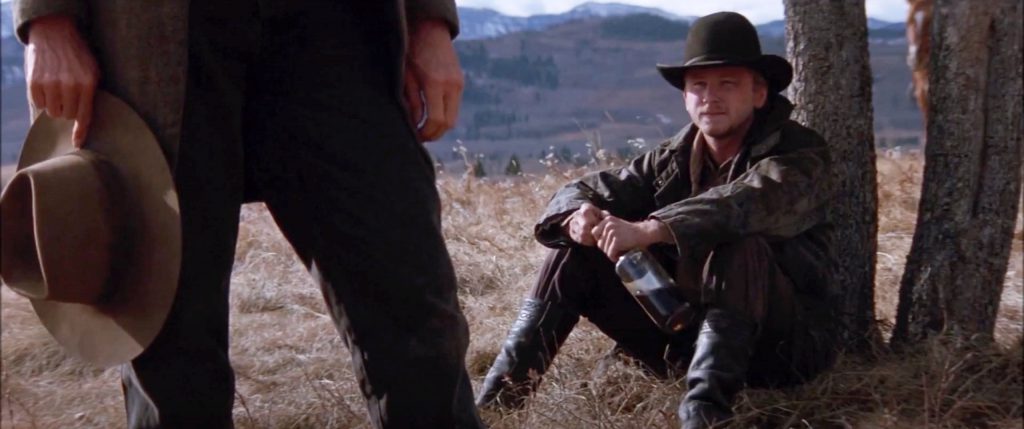
William Munny (Clint Eastwood), despite all of his efforts to avoid his misbegotten youth, will be that truth, that avenging angel. And when Delilah (Anna Thompson) brings news of Ned’s (Morgan Freeman) fate, the film’s truly chilling moment comes. After spending the lenght of the film talking about how he has given up drink and all sorts of wicked things, Will grabs the whiskey bottle and takes a drink. That’s all it takes, the image of him taking one drink and we know, absolutely know, the true gun of the old west is about to be drawn.

You can paint the picture to your liking, as Little Bill tries to do, as much as you want. But Will Munny will still find you and tear your house down. “I don’t deserve this,” Little Bill says, “to die like this. I was building a house.” Will tells him, “Deserves got nothing to do with it.” But, it actually has a lot to do with it from Will’s perspective. It’s just…Will’s better at the violent survivalist old west ranger role…he really lived it, was the villain, and is the past that will not die.

“I’ve always been lucky when it comes to killing folks,” he tells Beauchamp at last. He’s right. It’s just as much about luck as it is skill and experience. And when he sobers up, feels the shame and guilt, Will keeps running, disappearing. He’s the real unforgiven character; unable to make amends with his past, accept his life, or find gratitude for what he has. He can avenge Ned, and for one brief drunken night of violence he is as he was. Still whereever he goes, there he still is, unwilling to forgive himself; unaccepting of the love his dead wife, Claudia, gave him; unable to truly move on with his life.

But when the old west still needed him to take care of Sheriff Daggett, he was exactly where he needed to be. A great film by Director Eastwood (If you haven’t seen Million Dollar Baby (2004), check it out. Just as elegaic, poetic, and visually stunning)

Twenty Days & Twenty Movies

Not necessarily the best movies ever made, but these are twenty of my favorites, in no particular order.  Each post for the next twenty days will feature a brief discussion of one film (though one or two days will have multiple posts to make up for absences).

Post 13: Once Upon a Time…In Hollywood (2019 dir. Quentin Tarantino)

There’s a scene, towards the middle of this film, when Sharon Tate (Margot Robbie) is just driving around Los Angeles having an afternoon. She visits a book store then even goes to the movies to see herself on screen. At one point, you can see a car pull up several lengths behind hers, possibly following her. Her afternoon is simple, sweet, innocent, but that car made me so tense. It reminded me what happens to Sharon, at least in real life.

But this film is not real life, it is a fairy tale. Beautifully told, shot, acted, and edited, it bookends the year 1969, spending most of its time early that year with a day in the life of Rick Dalton (Leonardo DiCaprio) and his stuntman stand-in Cliff Booth (Brad Pitt). It is a simple premise, so well conceived and executed, so of its time, that I never once thought I was watching a movie, not until the glorious ending at least. Even though I already knew the story of what actually happens, the specter of Charles Manson (Damon Harriman), only briefly seen one time, haunts this film. It is a lament on the loss of innocence.

Tarantino enjoys toying with his audience, wondering what might be if only this could happen. His Inglourious Basterds (2009) ends with the perfect climax for that story, even if it is not what really happened during World War II. His Kill Bill duology is all about the expectations of its main character, The Bride (Uma Thurman), focused on one goal, and knowing what might be if only she could finish her revenge. And Jackie Brown, my favorite of Tarantino’s films, has its protagonist Jackie (Pam Grier) dreaming of escape, and a cohort, Max Cherry (Robert Forester in a great performance), dreaming of being with Jackie. It is unrequited hope and expectations.

The ending of this film, with its alternate history, implies that the loss of innocence, that something which Manson and his followers took from our culture, maybe did not have to be so severe. It asks us to imagine what might it be like if it had never happened, after all. But, it did happen. Sharon Tate’s fate, and the lives of all those others including the Manson Family, are part of history now. History and our collective unconscious.

But just for now imagine, as this movie does, if it had not happened. Imagine if Sharon were still alive. Imagine if no one ever heard of Charlie. Just imagine, the story really asks. It is a fairy tale, after all.

Twenty Days & Twenty Movies

Not necessarily the best movies ever made, but these are twenty of my favorites, in no particular order.  Each post for the next twenty days will feature a brief discussion of one film (though one or two days will have multiple posts to make up for absences).

Post 12: South Park: Bigger, Longer, & Uncut (1999 dir. Trey Parker)

As God as my witness, I didn’t know it was a musical. I had, in fact, never seen a single episode of the show, South Park, when I first saw this movie in 1999. In less than ten minutes I just about fell out of my chair with laughter. The boys, Kyle, Stan, Eric, & Kenny, were watching the film-within-the-film, Asses of Fire. The stars of that film, Terrance and Phillip, began singing their song about various acts one can do with an uncle and I simply could not believe my eyes or ears. Then, get this, they do a flatulent riff on Oklahoma! and Seven Brides for Seven Brothers. Unbelievable, shocking, anarchic, and simply hilarious.

To be fair, I would find none of it funny except there is an identifiable level of intelligent sophistication to all the goings on in this the only feature film version, so far, of Matt Parker and Trey Stone’s long-standing creative juggernaut. It’s clever, what else can I say? What would Brian Boitano do? Any filmmaker who can do a call-back joke based on the sound of a dying giraffe has my attention. Throw in Satan, yes Satan, plotting to take over the Earth alongside his after-life lover, Sadam Hussein (I can’t make this up), then add a particularly cynical, disgruntled, god-angry boy known as The Mole whose only fear is of dogs and…well, it just works.

Parker and Stone juggle these pieces like master circus performers. And they still find a way to make something meaningful out of it, something thought-provoking, about trusting children, talking to children, and most importantly listening to children. Never mind that Stan vomits in front of the girl that he likes on his quest to find the clitoris. He has no idea what a clitoris is, and that’s the innocence of it. The parents fighting against what they call corruption tragically do not realize they are actually the ones causing the problem, at least until it’s almost too late.

Oh, and it’s an Academy Award nominated movie too, and frankly should have won in its category. The film is irreverent, apolitical, and smart beyond all reason. It is also really, really funny. In those ways it evokes Mel Brooks’ The Producers (1967). If that offends you, well…blame Canda.

Twenty Days & Twenty Movies

Not necessarily the best movies ever made, but these are twenty of my favorites, in no particular order.  Each post for the next twenty days will feature a brief discussion of one film (though one or two days will have multiple posts to make up for absences).

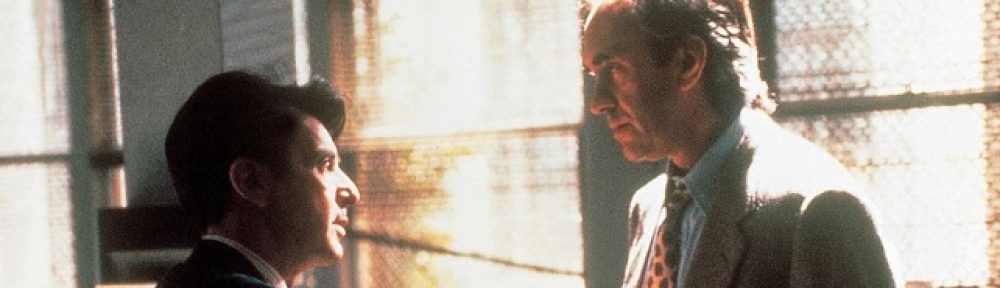
Post 11: Miller’s Crossing (1990 dir. Joel Coen & Ethan Coen)

Tom Reagan’s (Gabriel Byrne) unspoken, invulnerable loneliness permeates Miller’s Crossing so much that when he finally says goodbye to Leo (Albert Finney) the camera has to move in on Tom’s face, knowing words will not come but looking for some hint as to his feelings. The image provides a heartbreaking but understandable final moment. Dialogue simply would not suffice and the image of him carefully placing his hat back on his head, longingly looking back at his long-time friend walking away for the last time, places a perfect, quiet period at the end of the film. He loves his friend, is in love with Verna (Marcia Gay Harden), but simply cannot bring himself to say the words and these relationships are now so fractured he can no longer be around either of them.

Whenever asked, I always tell anyone Miller’s Crossing is my favorite of all movies. This was the third film from the Coen Brothers, after Blood Simple (1984) and Raising Arizona (1987). Their true classics were still to come, including the perfection of Fargo (1996), the anarchy of The Big Lebowski (1998), and the haunting dread of No Country for Old Men (2007). More than anything this film is a sentimental choice for me, having first seen it at the right moment, that crossroad of adolescence and awakening maturity. Buying a ticket for one film but then sneaking into this one instead (I was 15 and it was rated R after all), I first understood that while movies tell stories, they can be about so much more than what is on the surface and it deepened my love of film as an art form.

There are moments to cherish here. There is the opening, pre-credits scene dropping us into the 1930’s contemporary dialogue; Leo’s tommy-gun ballet set to the song “Danny Boy” beautifully sung by Frank Patterson; Bernie’s (John Turturro) life pleading soliloquy about dying in the woods like a dumb animal; the hilarious discussion between Tom and “Drop” Johnson (Mario Todisco); the threatening presence of The Dane (J.E. Freeman) and his speech about “up is down, black is white”; and Tom’s last, two-word question response when Bernie asks him to once again “Look into your heart.”

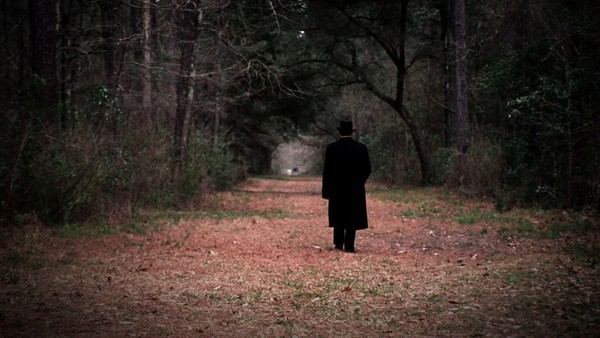
A couple of technical credits cannot go unmentioned. This was Barry Sonnenfeld’s final work with the Coen’s, having done the cinematography on their prior two films as well. The photographic work at Miller’s Crossing, the titular killing forest, is particularly notable, as well as the opening credits with its reverse omnipotent POV gazing up through the forest into the overcast sky. And, of course, Carter Burwell’s score. Once you’ve heard the main theme, you know it. Often reused, just as often imitated, but never equaled, the score evokes the sadness and joy of these characters’ lives and the crescendo of unspoken emotions at work in their spirits.

A good Coen Brothers film; a great film overall; my favorite film, Miller’s Crossing (1990).

Twenty Days & Twenty Movies

Not necessarily the best movies ever made, but these are twenty of my favorites, in no particular order.  Each post for the next twenty days will feature a brief discussion of one film (though one or two days will have multiple posts to make up for absences).

Post 10: Scrooge (1951 dir. Brian Desmond Hurst)

A Christmas Carol (1843 Charles Dickens) is my favorite book, but my introduction to it came from this movie, the greatest film version of all the Christmas Carols ever made. I have been enjoying this film since I was five years old. There is magic upon the screen here, and not just in the effective, albeit dated, visuals. Yes, it’s great to see Marley show Scrooge how the other ghosts lament outside of the window; or how Alice walks through the apparition of Scrooge.

Yes, those moments work, but the real magic is Alastair Sim. It is unfair but realistic to know that any stage or screen production of this story finds success in the quality of its Ebenezer Scrooge. Sim has no equal.

I point to two moments in the film, the first being the inroduction of the Ghost of Christmas Present (Francis De Wolff). Scrooge enters the rooms, sees the Ghost, then gives an exhausted whimper and turns away, finished with it before it has even begun. That reaction, that acting, was all Sim. Sim was primarily known as a comedic actor, so he was working his full talent when he found the funny bone in Ebenezer’s body. We not only laugh, but we shrug and nod, understanding this reaction and even agreeing with it.

The second moment comes during Scrooge’s awakening, his reclamation as this film puts it. Scrooge is pursuing his housekeeper, Mrs. Dilber (Kathleen Harrison), down the stairs. He is desperate to make amends, and to quiet her down. She is screaming in fear at his transformation. He eventually calms her down enough and gives her a Christmas present, an extra coin for her hard work. She honestly does not understand. “What’s it for? To keep my mouth shut?” she asks. Scrooge, through Sim, laughs uncontrollably. He’s laughing with her and he’s laughing at himself. His reclamation trudges forward and Scrooge understands the man he was, the man he is, and the man he could be. More importantly he understands her, outside of himself, and he can laugh with joy.

There are technically more slick, sophisticated, and expensive versions of this story on film. Many of them are quite good. None compare with this version. It is a great film, to be enjoyed any time of year.

Twenty Days & Twenty Movies

Not necessarily the best movies ever made, but these are twenty of my favorites, in no particular order.  Each post for the next twenty days will feature a brief discussion of one film (though one or two days will have multiple posts to make up for absences).

Post 9: Dead Again (1991 dir. Kenneth Branagh)

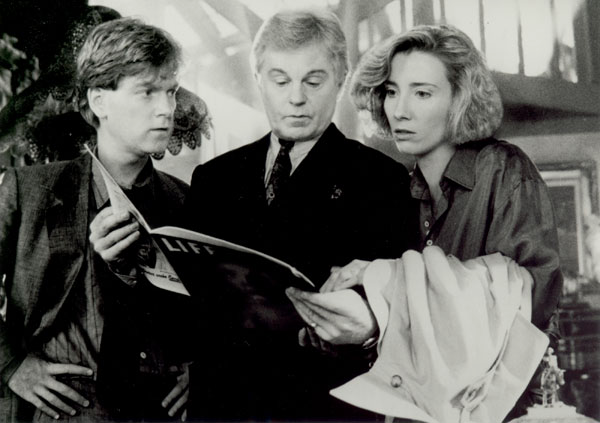
“MURDER” written in newsprint flashes across the screen, boldly opening Kenneth Branagh’s second film as director. He was coming off his brilliant success with Henry V (1989), when Scott Frank’s fun, elaborate, metaphysical script thankfully found its way into Branagh’s hands. His Shakespearean experience clearly enhances the dramatic gravitas Branagh gives to the story. There’s a lot going on here, and in another’s hands it might have come off as silly. This is not a silly film. Branagh treats it seriously. It is a bold, fearless, romantic thriller that reveals its story in broad operatic strokes.

Told not in flashbacks but in hypnotic memories, the plot concerns the murder of a woman, Margaret (Emma Thompson), in 1940’s Los Angeles then moves forward to present day (early 1990’s) weaving together the story of another woman, Grace (also Thompson), who has traumatically lost her memory. The two stories are linked and the mechanics and rules of how that link works fundamentally bring emotional weight and catharsis to its inevitable climax.

Supporting Thompson and Branagh are a host of talented actors. Andy Garcia, Robin Williams, Richard Easton, Hanna Schygulla, and Wayne Knight to name a few. It is Derek Jacobi, as Franklin Madson, who provides the personified link between the stories. His benign, innocent facade masks a paranoid, fearful motive. He preaches faith in fate, but still works to control the outcomes. “If fate works at all it works because people think that this time, it isn’t going to happen,” he tells another character right before the film’s finale, which sounds poetic, but really he’s trying to manipulate the endgame to his own satisfaction, not realizing Fate actually does have other plans.

And what a finale. Crosscutting the present-day resolution with the 1940’s and Roman (Branagh) applying the final notes to his opera just as he finds Margaret slain keeps the action, tragedy, and conclusion tumbling forward. The story is an opera itself, underscored by Patrick Doyle’s thrilling score. The opera in the film, the one about a monster, plays a part in the film’s climax, an appropriate finish to this daring story.

It is compelling and entertaining stuff. I echo what one characters states during the film, “I for one am very interested to see what happens next.” Luckily, what happens next, is worth every minute I have ever spent rewatching this movie.

Twenty Days & Twenty Movies

Not necessarily the best movies ever made, but these are twenty of my favorites, in no particular order.  Each post for the next twenty days will feature a brief discussion of one film (though one or two days will have multiple posts to make up for absences).

Post 8: Doctor Strange (2016 dir. Scott Derrickson)

The Marvel Cinematic Universe (MCU) functions best when it focuses on managing grief (I’m winking at you, WandaVision). The concept of loss within the parameters of a super-hero world inherently is compelling. The more powerful one is, the greater the capacity for epic loss.

Doctor Strange (Benedict Cumberbatch), Stephen to his few friends, loses his learned talents early in the film. I get to call him Stephen because I have a Doctor Strange tattoo (yes, I have a Doctor Strange tattoo). His self-centered, egotistical sense of arrogant invulnerability distracts him and proves to be his downfall. Through a series of desperate attempts to fix his broken hands he eventually learns the art of wizardry.

The process of his awakening to a new life coincides with his grieving the loss of his surgical abilities. He was a brilliant, talented surgeon. The story is a visual feast, particularly his journeys into the multiverse and his times in the mirror dimension. There are sights truly to behold here. Imagine if the Wachowskis and Timothy Leary had a love child and you begin to understand the scale of the imagery at work here.

But it is the subtle (yes, subtle subtext in a comic book film can happen) and complex meditation on grief which compels this viewer to love the film. One hour and twenty-three minutes into the film, there comes the great conversation. It is a masterful dialogue between Strange and the Ancient One (Tilda Swinton) and acts as an intervention of sorts. Stephen, probably for the first time in his life, accepts that the universe, in all of its vast possibilities, does not revolve around him. “It’s not about you,” she tells him and even the camera has to roll around her, astonished at his profound spiritual awakening.

The final battle with the villain is clever too, relying on Stephen’s wit and instinct rather than devolving into a fistfight. “I’ve come to bargain,” he tells the villain, Dormammu (also Cumberbatch in a duel role). Bargaining is part of the grief process too, and in this case the good Doctor does bargain not for his life, but for the lives of others.

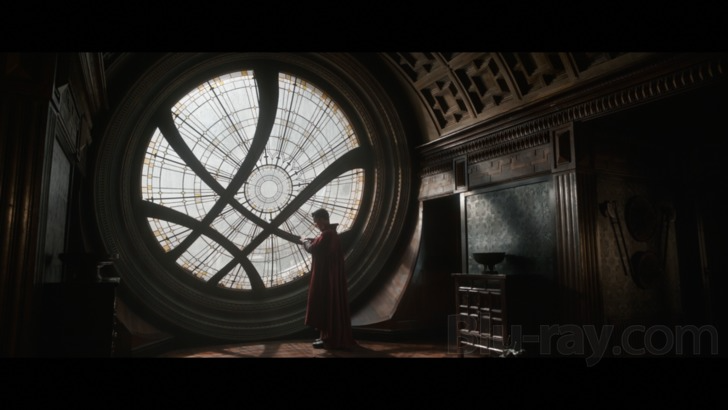
The film’s last real image, of Stephen standing at his window in the sanctum-sanctorum, watching his shaking hands, clasping the broken watch to his wrist, visually sums up his journey. Time stopped for him when his car crashed and broke that watch. Now, trembling fingers and all, he can move on from it. He has found both the strength to accept his new role as well as the resiliency to manage his grief just as it is, and only in that way can he move forward with his life.

And he does move forward. He is still the sarcastic cynic, but with a touch less arrogance and a good deal more empathy. Great stuff and my favorite of the MCU.

Twenty Days & Twenty Movies

Not necessarily the best movies ever made, but these are twenty of my favorites, in no particular order.  Each post for the next twenty days will feature a brief discussion of one film (though one or two days will have multiple posts to make up for absences).

Post 7: Lawrence of Arabia (1962 dir. David Lean)

I would have liked to have known David Lean, though I understand knowing him was not an easy task. There’s a moment, towards the final act of Lawrence of Arabia, when T.E. Lawrence (Peter O’Toole) orders “No prisoners!” and we believe him. We absolutely accept he means what he says, and the ensuing violence, while horrifying, works within the story.

Lawrence helps unify and lead the tribes and camps of desert cultures throughout Arabia during World War I. He begins the war as a cartogopher who carries an unhealthy obsession with the desert. Later in the war, after some success, a reporter asks Lawrence why he likes the desert so much. “Because it’s clean,” he replies. Again, we believe him.

There is an overwhelming sincerity, perhaps even deep-seeded innocence, to Lawrence and his adventures. Regardless of his character flaws, we empathize with him. Peter O’Toole’s acting here is some of the finest in film history. It is a forever performance.

Lawrence changes and evolves, transforming from a cartogropher into the military leader who orders “No prisoners!” He is an angry, selfish, arrogant, successful, compelling, romantic, complicated man. This film is epic in scale, for sure, but it is epic too in its intimacy. It is a character study primarily of one man, his passions and flaws, played out on a grand canvas of north African desert warfare.

Lawrence of Arabia, the intimate epic.

Twenty Days & Twenty Movies

Not necessarily the best movies ever made, but these are twenty of my favorites, in no particular order.  Each post for the next twenty days will feature a brief discussion of one film (though one or two days will have multiple posts to make up for absences).

Post 6: Malice (1993 dir. Harold Becker)

This movie’s plot does not make any sense, but I simply do not care. The film works anyway. The atmosphere, music, and performances all intertwine to suggest something is going on, and that something is not good. If movies are indeed not what they about but how they are about, then this one is well about its business.

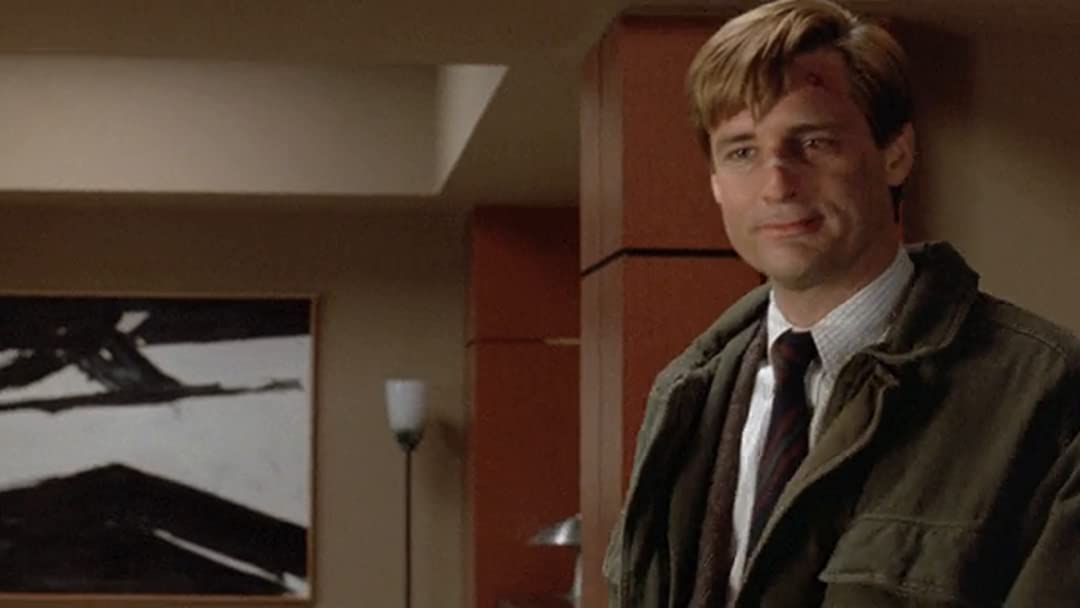
Bill Pullman always looks like the guy you could con out of his underwear. Nicole Kidman, here much earlier in her career, projects nasty motives better than she ever has. And Alec Baldwin, in a masterful performance, pulls off a great monologue wherein he basically describes himself as a deity. “I am God,” he tells the attorneys. It’s a fantastic moment.

Jerry Goldsmith’s score plays a part in the film, laying down a counter point to the actual action. And it’s action which, by the way, also includes a sub-plot (yes sub-plot) about a serial rapist stalking women at the local college where Bill Pullman’s character works. My favorite line? When asked why he looks so beat up, Pullman responds, “I just beat the shit out of a deeply disturbed serial rapist.”

Oh, and Ann Bancroft turns up too, playing Nicole Kidman’s estranged con-artist mother. George C. Scott hops on board as an old mentor to Alec Baldwin’s character. Gwyneth Paltrow appears in a small, early role as well. There’s a lot going on here. On and on the film goes, building this atmosphere of suspicion and misdirection, never really explaining itself, but it confidently keeps going. It’s a wonder to behold, entertaining, and in its own way emotionally satisfying.

Just don’t ask me to explain the plot.

Twenty Days & Twenty Movies

Not necessarily the best movies ever made, but these are twenty of my favorites, in no particular order.  Each post for the next twenty days will feature a brief discussion of one film (though one or two days will have multiple posts to make up for absences).

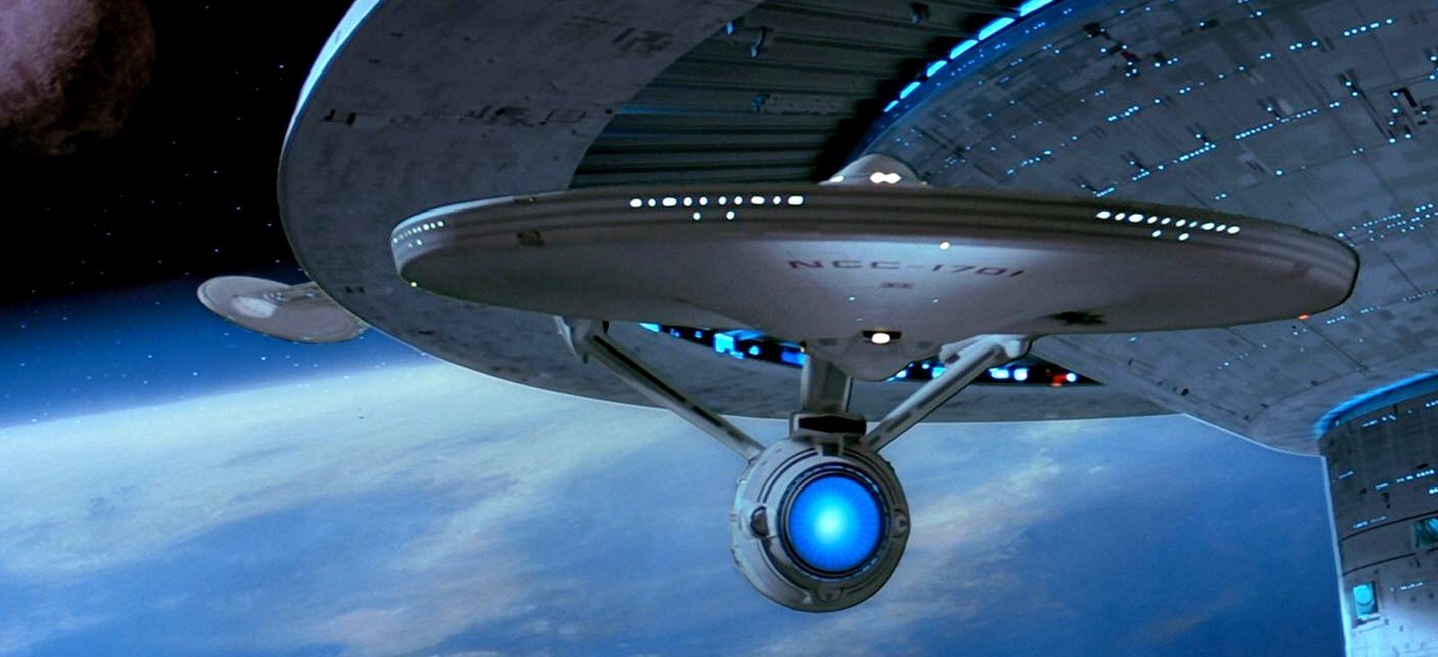
Post 5: Star Trek III: The Search for Spock (1984 dir. Leonard Nimoy)

If Nicholas Meyer’s Star Trek: The Wrath of Khan (1982) was about death and loss, then Leonard Nimoy’s Star Trek III: The Search for Spock is certainly about grief and consequences. Any film that succesfully addresses the consequences of choice, both good and bad, achieves at least a small measure of praise from me (Nolan’s The Dark Knight is another superb example). And the overall effect of this particular Star Trek film is both emotionally exhausting while at the same time exhilirating and hopeful. It is not necessarily the best of the Trek films, again Meyer’s Wrath of Khan is a better overall film as is Frakes’ Star Trek: First Contact (1996), but this one is my favorite of the franchise.

When Spock’s father, Sarek (Mark Lenard), suggests the slightest possibility that his son might be saved from the Genesis planet, Kirk and crew embark on a mission to save their friend, no matter the cost. Our heroes have a sense of family and responsibility to each other that is almost palpable. Kirk (William Shatner) tries to get official permission from Starfleet Command to lead a rescue mission, but his superiors tell him “No.” Kirk’s response is characteristically decisive and meaningful, “The word is no. I am therefore going anyway.”

That simple choice, to act on faith rather than simply follow orders, leads to a myriad of consequences, all in the name of saving their beloved friend and colleague, Spock. They break the law by stealing the Starship Enterprise, engage in warfare with the Klingon Commander Kruge (Christopher Lloyd) and his crew, deliberately destroy the Enterprise, and steal Kruge’s vessel pirating it to the planet Vulcan for sanctuary and spiritual healing. Worst of all, Kirk’s own son dies, murdered by the Klingons. Watch Shatner’s heartbreaking response at the death of his son David (Merritt Butrick), a remarkably poignant moment from a sci-fi sequel.

Listen too to Bones’ (Deforest Kelley) speech to the unconscious Spock, and Kelley’s careful eye movements during his speech. There’s a complexity of emotions to his delivery of the line “I’m going to tell you something I never thought I’d ever hear myself say…” A lot of care and preparation went into this film, and you can see it on screen, especially in the acting.

There is just something to the dedication and love these characters have for one another that resonates with my inner spirit. This film captures that intimacy and reminds us of the consequences we might face for consciously choosing love and faith instead of acting from fear and doubt.