“Didn’t do wrong, did I?”
So asks Henry Wilcox (Anthony Hopkins) at the end of Merchant/Ivory’s magnum Opus, Howards End. His righteous insecurities already fuel enough of the conflict in James Ivory’s film, but even he cannot decide anything for himself or bring himself to look his wife in the eye when confronting his own guilt and shame regarding misbehaviors, bad choices, and broken promises.
Broken promises of unexpected gain in fact live at the heart of both E.M. Forester’s book, read only once by me, and this beautiful film. The opening scene of the film establishes the theme with the broken engagement between Helen Schlegel (Helena Bonham Carter) and Paul Wilcox (Joseph Bennett). Then Ruth Wilcox (Vanessa Redgrave) wishes to grant her home to Margaret Schlegel (Emma Thompson), only to have that promise lost by a fateful choice, at least for a time.
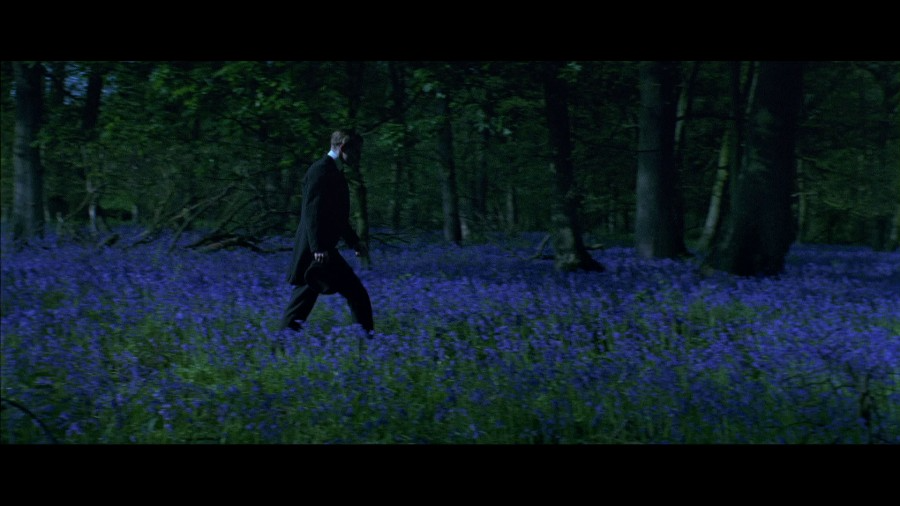
On and on the story goes, promising all sorts of social gain then altering the path so that such gain is harder and harder to reach. I suppose it’s a question of societal worth as well and what we owe to each other that matters in the end. Leonard Bast (Samuel West), who wants nothing from anyone, feels that need the most. His long trek of destiny at the end of the film, from London to the eponymous house, provides the film’s most ethereal sense of hope and dread. He will get to where he is going, but the promise of reasonable resolution will remain elusive.
Every frame of this perfect film feels lovingly blocked and realized. It drips with period detail. Watching it, I feel like I am living in Edwardian times. Much like the inside of Howards End, the film and story’s central set piece, it creates a sense of home and comfort away from the troubles of every day life. This company’s follow-up, The Remains of the Day (1993), gives that sense as well, but this film is their best overall achievement.
And when Henry asks that question at the end, “Didn’t do wrong, did I?” I remember turning to my friend in the theater in 1992 and nodding at her. Yes, yes he did do wrong. He really did.
 Shadows & Silence