Not necessarily the best movies ever made, but these are twenty of my favorites, in no particular order. Each post for the next twenty days will feature a brief discussion of one film (though one or two days will have multiple posts to make up for absences).
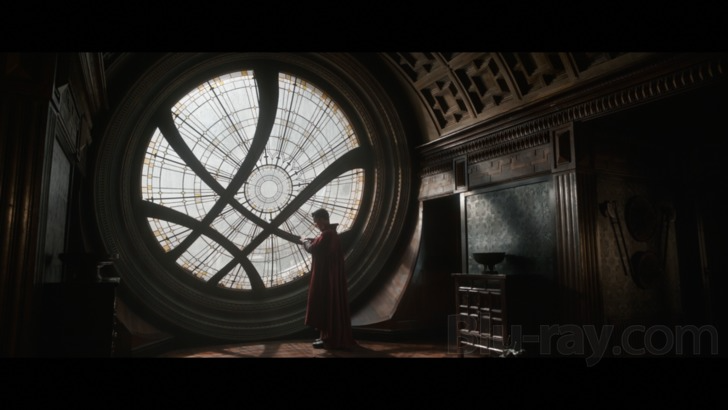
Post 8: Doctor Strange (2016 dir. Scott Derrickson)
The Marvel Cinematic Universe (MCU) functions best when it focuses on managing grief (I’m winking at you, WandaVision). The concept of loss within the parameters of a super-hero world inherently is compelling. The more powerful one is, the greater the capacity for epic loss.
Doctor Strange (Benedict Cumberbatch), Stephen to his few friends, loses his learned talents early in the film. I get to call him Stephen because I have a Doctor Strange tattoo (yes, I have a Doctor Strange tattoo). His self-centered, egotistical sense of arrogant invulnerability distracts him and proves to be his downfall. Through a series of desperate attempts to fix his broken hands he eventually learns the art of wizardry.
The process of his awakening to a new life coincides with his grieving the loss of his surgical abilities. He was a brilliant, talented surgeon. The story is a visual feast, particularly his journeys into the multiverse and his times in the mirror dimension. There are sights truly to behold here. Imagine if the Wachowskis and Timothy Leary had a love child and you begin to understand the scale of the imagery at work here.
But it is the subtle (yes, subtle subtext in a comic book film can happen) and complex meditation on grief which compels this viewer to love the film. One hour and twenty-three minutes into the film, there comes the great conversation. It is a masterful dialogue between Strange and the Ancient One (Tilda Swinton) and acts as an intervention of sorts. Stephen, probably for the first time in his life, accepts that the universe, in all of its vast possibilities, does not revolve around him. “It’s not about you,” she tells him and even the camera has to roll around her, astonished at his profound spiritual awakening.
The final battle with the villain is clever too, relying on Stephen’s wit and instinct rather than devolving into a fistfight. “I’ve come to bargain,” he tells the villain, Dormammu (also Cumberbatch in a duel role). Bargaining is part of the grief process too, and in this case the good Doctor does bargain not for his life, but for the lives of others.
The film’s last real image, of Stephen standing at his window in the sanctum-sanctorum, watching his shaking hands, clasping the broken watch to his wrist, visually sums up his journey. Time stopped for him when his car crashed and broke that watch. Now, trembling fingers and all, he can move on from it. He has found both the strength to accept his new role as well as the resiliency to manage his grief just as it is, and only in that way can he move forward with his life.
And he does move forward. He is still the sarcastic cynic, but with a touch less arrogance and a good deal more empathy. Great stuff and my favorite of the MCU.
 Shadows & Silence