Ghostbusters: Afterlife (2021 dir. Jason Reitman)

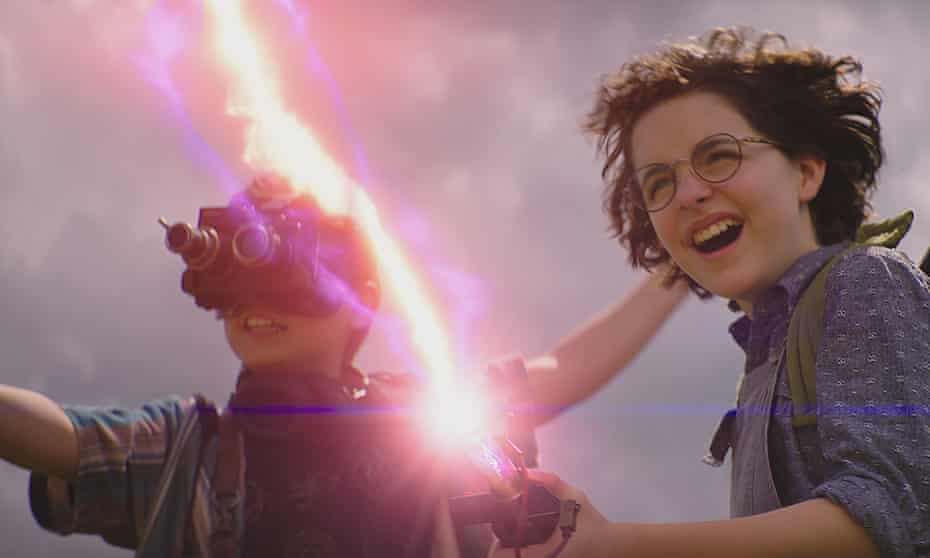
Phoebe (McKenna Grace) and Podcast (Logan Kim) uncover supernatural nostalgia in Oklahoma.

Anyone who suggests that this film is just a cynical retread of a beloved franchise solely aimed at box-office returns will probably find a lump of coal in their stocking come the morning of December 25th. It’s not a great film, but it is better than it needs to be and even gives a genuine emotional catharsis to anyone invested in the original Ghostbusters (1984). If you haven’t seen that original film, I don’t know what to tell you except there is no appreciating this one without it.

More than anything, the movie feels like a group of friends, old and new, making amends with and giving one last hug to Harold Ramis, and that alone is a worthwhile, honorable reason to see it. Ramis was a motion picture comedic genius and his influence on American culture cannot be overstated. Afterlife is an homage to not only Ramis, but also the Steven Spielberg/Richard Donner adventure films of the 1970’s & 1980’s. Imagine if the Goonies (1985) and E.T. (1982) had a love child raised by Superman (1978) and you begin to understand Jason Reitman’s approach to this material.

When their estranged grandfather passes away, adolescent siblings Phoebe (McKenna Grace) and Trevor (Finn Wolfhard) move into his neglected farmhouse in Oklahoma with their mother, Callie (Carrie Coon) only to slowly discover that not only was their grandfather one of the original Ghostbusters, but he also was patiently guarding an apocalyptic secret. In Oklahoma they befriend Podcast (Logan Kim), Lucky (Celeste O’Connor), and Gary Grooberson (Paul Rudd) all of whom will, of course, play a part in the final confrontation with the ghosts and demons.

I chuckled a lot and laughed out loud at least once (the suicidal anarchy of the miniature Stay-Puft Marshmallow men has to be seen to be appreciated). Grace is a real standout as the film’s true protagonist. She finds the right balance between unemotional sarcasm and the wonderment of discovery as she solves the mystery of her family’s legacy. And Kim has a fun time as her only friend and constant podcaster. Wolfhard is under-utilized and I wish a lot more had been done with Ivo Shandor (J.K. Simmons) and his backstory/involvement with Gozar (Olivia Wilde). Simmons is there…and then, too suddenly, he’s gone. Maybe his exit was supposed to be funny? I don’t know, but it just doesn’t work.

What does work is the overall nostalgia, not sentimentalism, building to the film’s Harry Potter-esque finale. I saw the original in theaters in 1984 as well as the fun, but disappointing, sequel in 1989. I sincerely enjoyed the non-canon 2016 film, entirely ignored here, with its talented cast. Ghostbusters: Afterlife, appropriately titled and the best of the sequels, is about unfinished business and confidently tells its story while giving the audience a lot of reason to smile.
Twenty Days & Twenty Movies

Not necessarily the best movies ever made, but these are twenty of my favorites, in no particular order.  Each post for the next twenty days will feature a brief discussion of one film (though one or two days will have multiple posts to make up for absences).

Post 20: National Lampoon’s Christmas Vacation (1989 dir. Jeremiah Chechnik)

This movie shouldn’t work, but still it endures and Thank God. Through sheer willpower, dedication, and cultural significance, Christmas Vacation survives and thrives. Much like the film’s story, it sweats persistence in the face of absolute chaos.

Thirty-two years ago when it premiered the film performed well but was dismissed as only occasionally funny. On the first day of this twenty day review I discussed Spielberg’s 1941 and how hindsight has served it well. The same is true here. What no one in 1989 took into account, I think, was just how relatable the film’s family situation actually is to nearly every audience member.

Yes it is exaggerated (I hope) for comedic effect, but at its heart is an amusing truth about absurd family holiday traditions and bemused tight-lipped tolerance. So when Clark (Chevy Chase) turns to Ellen (Beverly D’Angelo), deadpan, and asks his wife, “Have you checked our shitters, honey?” we get the joke and think about the family members who are our Cousin Eddie (Randy Quaid). Or when Audrey (Juliette Lewis) gives passive-aggressive attitude to Clark and asks, “We’re not driving all the way out here just so you can get one of those stupid ties with Santa Clauses on it are we, dad?” She’s not wrong (Clark already has one of those ties, but you just know he’s thinking about it), and I can nod and smile and remember second-guessing my father on his diverted motives.

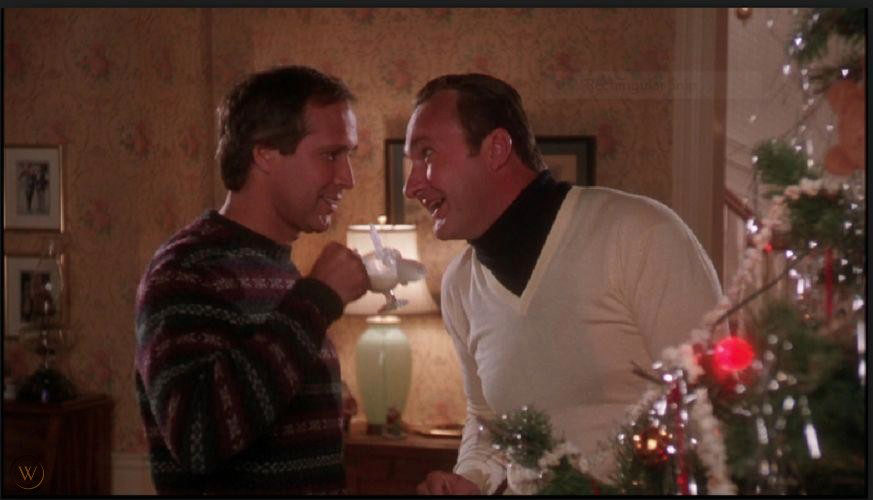
John Hughes wrote the film and I can tell, at times, that he really enjoyed writing banter between disparate characters; Planes, Trains, and Automobiles (1987), his best film, is a great example. Here he writes an absolutely hilarious scene between Clark and Eddie. It’s just the two of them, standing in the living room, admiring the Christmas tree. Their perspectives are entirely opposite but the dialogue plays off of each other so well, especially in the performances, that Eddie never understands just how exasperated Clark really is with him. It’s a great scene and the final punch-line lands, not an easy feat, just as Clark chokes on his eggnog.

My favorite line? Right as Eddie arrives Clarks turns to him and tells him, “If I woke up tomorrow with my head sewn to the carpet I couldn’t be more surprised than I am right now.” Innocent, sarcastic deflection of honest emotions…behavior that is, at times, truly family.

Christmas Vacation embraces the audience and invites us to laugh with its characters not at them, and that is the film’s enduring strength.

Twenty Days & Twenty Movies

Not necessarily the best movies ever made, but these are twenty of my favorites, in no particular order.  Each post for the next twenty days will feature a brief discussion of one film (though one or two days will have multiple posts to make up for absences).

Day 19: The Lord of the Rings: The Two Towers (2002 dir. Peter Jackson)

There is a difference between belief and faith. I can believe that the neurosurgeon can help me, but until they actually do I won’t have faith in them. I believed someone could make a film version of Tolkien’s magnum opus, a book I have reread many times. But until I actually saw the first film did I have faith in Peter Jackson and his team.

Don’t misunderstand, I think of The Lord of the Rings as one complete film split into three parts. A strong belief in the project, mixed with a healthy sprinkle of trepidation, got me into the theaters in 2001 for The Fellowship of the Ring. I genuinely felt disappointed at the end of that film, not because it failed, but because it was over; I wanted more.

And more I got, just the following year. I single out The Two Towers because it must necessarily do the most heavy lifting for the story to unfold. Having already established the quality of the filmmaking in the first part, this part takes what was done and throws the chracters into chaotic, unpredictable situations, as quality trilogy middle chapters typically do.

But could they pull off Treebeard? And would Gollum be fantastic or folly? There was a time when no one had heard of Weta Digital, but their work on this film in particular lifted the entire trilogy from epic entertainment into artistic amazement. The simplicity and creative genius involved in a sequence like Smeagol telling Gollum, through a reflective pool, to go away and never come back is evidence enough of the thoughtful storytelling at work here. That and Andy Serkis’ powerful acting.

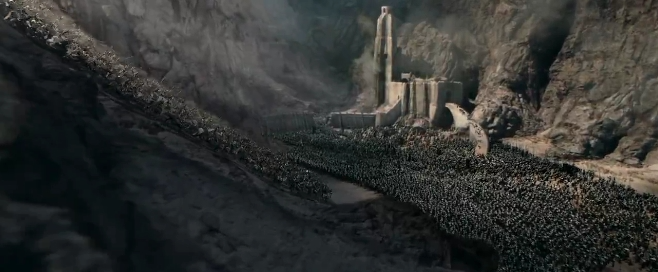
And when the Ents release the river, flooding Isengard, my jaw literally dropped. It is thrilling, emotionally satisfying action. Gandalf’s charge with the Rohirrim down into Helm’s Deep is another example of faith rewarded, not just faith in the filmmakers to provide the pacing and imagery needed, but Aragorn’s faith in his friends. He listened. He took council. He made choices and he held out for as long as he could. That perserverence pays off when Gandalf keeps his word and routes the orcs from Rohan.

The Return of the King provides the emotional pay-off to the entire story. The Fellowship of the Ring gives introduction to the world and the characters. But The Two Towers, my favorite of the trilogy, establishes the artistic achievements and the story themes that echo until this day. It is a marvelous trilogy, never to be lost or forgotten.

Twenty Days & Twenty Movies

Not necessarily the best movies ever made, but these are twenty of my favorites, in no particular order.  Each post for the next twenty days will feature a brief discussion of one film (though one or two days will have multiple posts to make up for absences).

Post 18: Watchmen (2009 dir. Zack Snyder)

I was nervous walking into Zack Snyder’s film version of Watchmen. I am an avid fan of the graphic novel, one of my favorite books, and had been since 1986 when it premiered in serialized issues. So imagine the chilling wonder I felt within the first few minutes as the story unfolded, the Comedian (Jeffrey Dean Morgan) thrown from his apartment, and Bob Dylan’s song “The Times They are A-Changin'” strummed along during the opening credits. The song is all Snyder.

What the film absolutely gets right is the setting (an alternate 1985 when Richard Nixon is still President of the United States) and the tone. With the world on the brink of nuclear destruction, as it often was in the 1980s, the murder of one of the Watchmen incites a mystery which unfolds through the persistent investigation of Rorschach (Jackie Earle Haley in a magnificent performance), the most unstable of the Watchmen, and his one-time partner Nite Owl (Patrick Wilson). Solving the murder is not the climax of the story but rather leads into the final act and all the story’s considered, thoughtful implications about the value of individual human life.

It is that tenacious focus on the themes and the tone which makes this a great film, and one of my favorites. There is a generational story here, the original Watchmen from the 1940s and the current ones in the 1980s. That passage of time becomes personified in the character of Dr. Manhattan (Billy Crudup), the one hero with God-like supernatural powers, whose own concept of time lives not in chronology but in theoretical physics and relativity. And if mortality is what helps give meaning to human life, how can Manhattan value the lives of anyone without a sense of beginning or ending? Will he come to humanity’s aid, or does he just not see any value in it?

How the story and characters resolve all of this becomes the real beauty of the film. The climax, better here even than in the book (yes, maybe that’s heresy to some, but there it is), is exhausting, exuberant, and emotionally satisfying on every level the film explores. And at the end when Rorschach quietly asks Manhattan, “What are you waiting for?” I got chills and cried. His films can at times be all over the place, but here Snyder, his writers, and production team nailed it. It’s a triumph.

Twenty Days & Twenty Movies

Not necessarily the best movies ever made, but these are twenty of my favorites, in no particular order.  Each post for the next twenty days will feature a brief discussion of one film (though one or two days will have multiple posts to make up for absences).

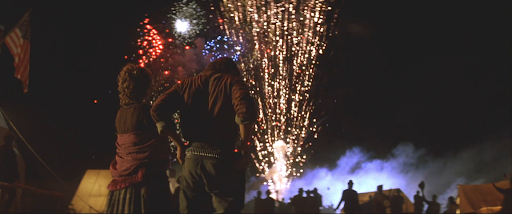
Post 17: Wyatt Earp (1994 dir. Lawrence Kasdan)

It begins moments before the OK Corral, travels back to his boyhood in Illinois, moves forward through time detailing his life, then finally circles back to that moment when Wyatt (Kevin Costner) made the choice to take a walk down the streets of Tombstone, AZ with his brothers and Doc Holliday (Dennis Quaid in a brilliant performance), staying true to history with his simple quiet words, “Let’s go.”

The movie moves beyond the OK Corral and into Wyatt’s vengeance-filled ride against those who were going to harm his family. It ends with his prospecting days, but I would have liked to have seen him walking the backlots of early Hollywood, as he did, consulting on early westerns. Earp’s life was complex, dark, troubled, romantic, violent, and difficult to understand especially sometimes his choice in friends. It’s those layers of Earp which this film gets absolutely right.

But it probably is also why the film does not endure as much as films like My Darling Clementine (1946), Gunfight at the OK Corral (1957), and Tombstone (1993). Cinematic western heroes typically are archetypes, more universal and whose motives are easier to understand. This film provides a more character-driven look at a man whose life is usually only shown in relation to his participation in one gunfight. To be fair, that gunfight is the most famous in western history but it is only a few seconds of his life.

I have been fascinated with Wyatt Earp’s life since I was a little boy. Many biographies, documentaries, and interviews try to get to the core of what motivated him. It is difficult to say what his character spine really was, especially in relation to his friendship with John Holliday. The beauty of this film is in its desire to provide a comprehensive and epic look at the life of one of the most famous of North American Old West legends.

Maybe its goal is its chief failing in that the legend is far more entertaining than the history. But Earp did not exist in order to become legendary, he was just a man making choices and living his life. And when it comes to this movie, which is not a failure at all, I appreciate the history, the truth. More than any of the other pictures from this twenty day challenge, this one is a deeply personal one for me. It is a flawed but very good, very thoughtful, very well-made film. It is a true favorite of mine.

Twenty Days & Twenty Movies

Not necessarily the best movies ever made, but these are twenty of my favorites, in no particular order.  Each post for the next twenty days will feature a brief discussion of one film (though one or two days will have multiple posts to make up for absences).

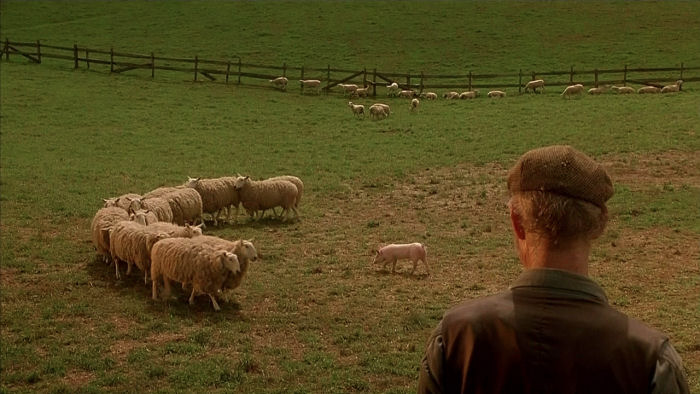
Post 16: Babe (1995 dir. Chris Noonan)

“The pig and the farmer regarded each other and, for a fleeting moment, something passed between them, a faint sense of some common destiny.”

That line of dialogue, spoken early in the film by the Narrator (Roscoe Lee Browne), got my attention. It sets the tone and builds expectations for something grander and more meaningful than I was anticipating. Not long after, Ferdinand (Danny Mann), the anorexic duck, shows up panicking about the upcoming Christmas holiday and his potential place at the dinner table. “Christmas means carnage!” he cries. Later, when he does not become Christmas dinner, he gets philosophical, “The fear’s too much for a duck. It – it eats away at the soul! There must be kinder dispositions in far-off gentler lands.”

Kinder dispositions in far-off gentler lands…the movie really had me at this point. Oh, and there’s the greek chorus of mice who introduce each chapter and interject commentary throughout the film, even bursting into their own squeaky version of “Blue Moon.” The creative genius evident here never stops, never talks down to the audience, and never disappoints.

Babe is a tour-de-force of empathy and innocence exploring the nature of the world and one’s place in it. None of this would have worked without the few human actors in the film, particularly James Cromwell, in an Oscar-nominated role, as Farmer Hoggett. A man of few words but with a decisive moral center, Hoggett is one of the most courageous of characters in any movie ever. His belief in Babe tests his own sense of social place. And his eventual choice to stand outside the circle of his peers demonstrates remarkable bravery, an imitable act of faith which I have rarely seen in movies.

That and his serenade/dance jig is simply adorable. I just want to hug this movie.

Twenty Days & Twenty Movies

Not necessarily the best movies ever made, but these are twenty of my favorites, in no particular order.  Each post for the next twenty days will feature a brief discussion of one film (though one or two days will have multiple posts to make up for absences).

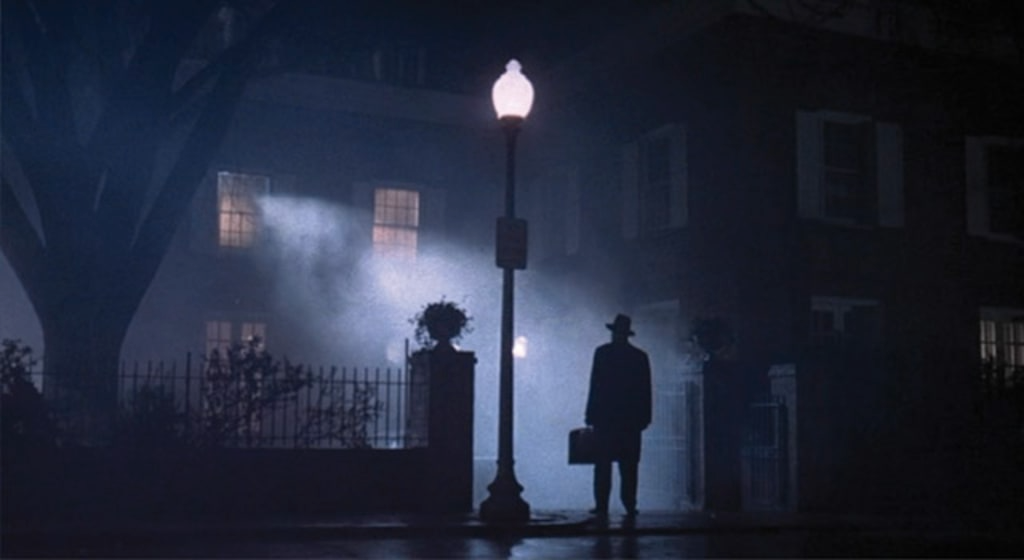
Post 15: The Exorcist (1973 dir. William Friedkin)

Again I return to the frigid dark of The Exorcist. I love this movie and know of no other film that so well captures indescribable, inseparable, inexplicable guilt. Each of the main characters carries an overwhelming weight of regret over past behavior. Their sins laid bare. only the sacrifice of a holy person can rectify their collective trauma, personified in the innocence-gone-foul that is Regan MacNeil (Linda Blair).

This is one very frightening film. And it isn’t so much the supernatural, but rather those elements grounded in everyday reality which terrify me. As someone who has undergone invasive medical tests and procedures, the scenes of Regan being examined are difficult to watch. As a father those same scenes fill me with fear and doubt as I imagine my own children receiving the same treatment. The emotional impact in those moments, and throughout the film, works on a multitude of levels.

The movie just feels like it is always trying, but never able, to catch its breath. It just doesn’t stop, nor should it. Nominated for best picture of the year, a unique but not unheard of honor for a drama filled with horror elements (I’m cautiously peering at you Silence of the Lambs), the film deserves all the accolades and praise given to it over these many decades. It is precisely because of the naturalistic settings and acting that the film endures to this day.

The acting in particular always beckons me back, especially Jason Miller as Fr. Karras. He projects such a quiet empathy, a deep and objective love, that I always, always admire him. Just when I begin to wonder, he always expresses his own guilt and fear at just the right moments. He is the audience’s crucible, the vessel through which we can finally begin to, at the very least, approach this material and feel some measure of comfort.

The marriage of guilt and empathy which Miller gives up to the audience is also what makes his character the most willing and vulnerable to the horror patiently awaiting in the dark attic of the final act. It is masterful drama played out on a religious and supernatural canvas. I understand that this subject matter is not for everyone, but it is among the greatest of all films ever made, and one of my favorites.

Twenty Days & Twenty Movies

Not necessarily the best movies ever made, but these are twenty of my favorites, in no particular order.  Each post for the next twenty days will feature a brief discussion of one film (though one or two days will have multiple posts to make up for absences).

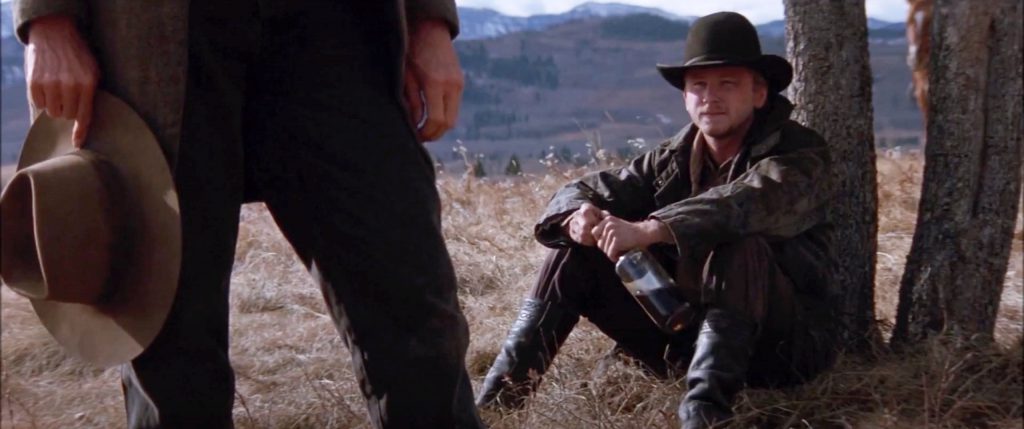
Post 14: Unforgiven (1992 dir. Clint Eastwood)

Sheriff “Little” Bill Daggett (Gene Hackman) spends the film building his house. In his own way, he is taming the west by bringing civilization to the frontier in Big Whiskey. He controls his town with his own sense of righteous justice, believing he understands the history and the consequences because he’s lived it. W.W. Beauchamp (Saul Rubinek) takes a shine to the sheriff, falling into his narcissistic circle, and believing Bill’s version of the history, the tradition, the romance of the old west.

But Daggett does not control as much as he thinks he does. His design is flawed. The roof of his under-construction home leaks whenever it rains. And no matter how hard he tries, or how intimidating he thinks he is, he cannnot patch the holes faster than the water comes pouring in; the truth will find its way.

William Munny (Clint Eastwood), despite all of his efforts to avoid his misbegotten youth, will be that truth, that avenging angel. And when Delilah (Anna Thompson) brings news of Ned’s (Morgan Freeman) fate, the film’s truly chilling moment comes. After spending the lenght of the film talking about how he has given up drink and all sorts of wicked things, Will grabs the whiskey bottle and takes a drink. That’s all it takes, the image of him taking one drink and we know, absolutely know, the true gun of the old west is about to be drawn.

You can paint the picture to your liking, as Little Bill tries to do, as much as you want. But Will Munny will still find you and tear your house down. “I don’t deserve this,” Little Bill says, “to die like this. I was building a house.” Will tells him, “Deserves got nothing to do with it.” But, it actually has a lot to do with it from Will’s perspective. It’s just…Will’s better at the violent survivalist old west ranger role…he really lived it, was the villain, and is the past that will not die.

“I’ve always been lucky when it comes to killing folks,” he tells Beauchamp at last. He’s right. It’s just as much about luck as it is skill and experience. And when he sobers up, feels the shame and guilt, Will keeps running, disappearing. He’s the real unforgiven character; unable to make amends with his past, accept his life, or find gratitude for what he has. He can avenge Ned, and for one brief drunken night of violence he is as he was. Still whereever he goes, there he still is, unwilling to forgive himself; unaccepting of the love his dead wife, Claudia, gave him; unable to truly move on with his life.

But when the old west still needed him to take care of Sheriff Daggett, he was exactly where he needed to be. A great film by Director Eastwood (If you haven’t seen Million Dollar Baby (2004), check it out. Just as elegaic, poetic, and visually stunning)

Twenty Days & Twenty Movies

Not necessarily the best movies ever made, but these are twenty of my favorites, in no particular order.  Each post for the next twenty days will feature a brief discussion of one film (though one or two days will have multiple posts to make up for absences).

Post 13: Once Upon a Time…In Hollywood (2019 dir. Quentin Tarantino)

There’s a scene, towards the middle of this film, when Sharon Tate (Margot Robbie) is just driving around Los Angeles having an afternoon. She visits a book store then even goes to the movies to see herself on screen. At one point, you can see a car pull up several lengths behind hers, possibly following her. Her afternoon is simple, sweet, innocent, but that car made me so tense. It reminded me what happens to Sharon, at least in real life.

But this film is not real life, it is a fairy tale. Beautifully told, shot, acted, and edited, it bookends the year 1969, spending most of its time early that year with a day in the life of Rick Dalton (Leonardo DiCaprio) and his stuntman stand-in Cliff Booth (Brad Pitt). It is a simple premise, so well conceived and executed, so of its time, that I never once thought I was watching a movie, not until the glorious ending at least. Even though I already knew the story of what actually happens, the specter of Charles Manson (Damon Harriman), only briefly seen one time, haunts this film. It is a lament on the loss of innocence.

Tarantino enjoys toying with his audience, wondering what might be if only this could happen. His Inglourious Basterds (2009) ends with the perfect climax for that story, even if it is not what really happened during World War II. His Kill Bill duology is all about the expectations of its main character, The Bride (Uma Thurman), focused on one goal, and knowing what might be if only she could finish her revenge. And Jackie Brown, my favorite of Tarantino’s films, has its protagonist Jackie (Pam Grier) dreaming of escape, and a cohort, Max Cherry (Robert Forester in a great performance), dreaming of being with Jackie. It is unrequited hope and expectations.

The ending of this film, with its alternate history, implies that the loss of innocence, that something which Manson and his followers took from our culture, maybe did not have to be so severe. It asks us to imagine what might it be like if it had never happened, after all. But, it did happen. Sharon Tate’s fate, and the lives of all those others including the Manson Family, are part of history now. History and our collective unconscious.

But just for now imagine, as this movie does, if it had not happened. Imagine if Sharon were still alive. Imagine if no one ever heard of Charlie. Just imagine, the story really asks. It is a fairy tale, after all.

Twenty Days & Twenty Movies

Not necessarily the best movies ever made, but these are twenty of my favorites, in no particular order.  Each post for the next twenty days will feature a brief discussion of one film (though one or two days will have multiple posts to make up for absences).

Post 12: South Park: Bigger, Longer, & Uncut (1999 dir. Trey Parker)

As God as my witness, I didn’t know it was a musical. I had, in fact, never seen a single episode of the show, South Park, when I first saw this movie in 1999. In less than ten minutes I just about fell out of my chair with laughter. The boys, Kyle, Stan, Eric, & Kenny, were watching the film-within-the-film, Asses of Fire. The stars of that film, Terrance and Phillip, began singing their song about various acts one can do with an uncle and I simply could not believe my eyes or ears. Then, get this, they do a flatulent riff on Oklahoma! and Seven Brides for Seven Brothers. Unbelievable, shocking, anarchic, and simply hilarious.

To be fair, I would find none of it funny except there is an identifiable level of intelligent sophistication to all the goings on in this the only feature film version, so far, of Matt Parker and Trey Stone’s long-standing creative juggernaut. It’s clever, what else can I say? What would Brian Boitano do? Any filmmaker who can do a call-back joke based on the sound of a dying giraffe has my attention. Throw in Satan, yes Satan, plotting to take over the Earth alongside his after-life lover, Sadam Hussein (I can’t make this up), then add a particularly cynical, disgruntled, god-angry boy known as The Mole whose only fear is of dogs and…well, it just works.

Parker and Stone juggle these pieces like master circus performers. And they still find a way to make something meaningful out of it, something thought-provoking, about trusting children, talking to children, and most importantly listening to children. Never mind that Stan vomits in front of the girl that he likes on his quest to find the clitoris. He has no idea what a clitoris is, and that’s the innocence of it. The parents fighting against what they call corruption tragically do not realize they are actually the ones causing the problem, at least until it’s almost too late.

Oh, and it’s an Academy Award nominated movie too, and frankly should have won in its category. The film is irreverent, apolitical, and smart beyond all reason. It is also really, really funny. In those ways it evokes Mel Brooks’ The Producers (1967). If that offends you, well…blame Canda.